
How exercising Indigenous Rights represents the best hope for protecting and regenerating our Mother Earth and all life
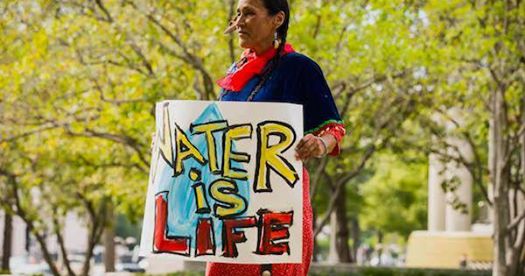
We have lost so much. Despite all the rhetoric and "green" laws, the daily attack on the Earth continues. Water, the lifeblood of the Earth continues to be degraded and poisoned. But within the darkness of this landscape there shines a ray of hope – the emerging movement of Indigenous Rights Holders supported by Settler Allies. All over Turtle Island, Indigenous people, led by the women, are standing up for the land and water.
Come learn how to support this movement.
“Toronto” is recognized as Traditional Anishinaabe Territory with the Rights Holders being the Mississaugas of the New Credit. It is also a major metropolitan city with four river systems and many ravines that are wildlife corridors throughout the city. There are many staff in the city who are deeply committed to the Earth. But change is slow, if it happens at all. Why?
In this session with Kevin Best, the series curator who has been working on merging Indigenous and non-Indigenous actions for restoring the Great Lakes bioregion for more than 20 years, we will be joined in conversation by Giidaakunadaad (Nancy) Rowe from Mississaugas of the New Credit First Nation. We will also hear about New Credit’s initiatives to protect the land and water and their movement to restore Indigenous Governance in Toronto. We will also explore the opportunities and challenges in working with government structures, particularly in the areas of planning, education and the rights of Indigenous children.
We will explore how exercising Indigenous Rights and re-establishing Indigenous governance are the best, if not the only, hope for protecting the land and water from further assault and beginning the process of regeneration. We will look at how realizing this hope requires spiritual, political, technical and social action.
There is a “Duty to Consult” as established by the Supreme Court, the United Nations Declaration of the Rights of Indigenous Peoples (UNDRIP), and the Truth and Reconciliation Commission (TRC), all of which the present federal government has sworn to uphold. And the City of Toronto has passed a resolution supporting UNDRIP. The tools are there but they are hardly being used, if at all.
Come learn how to support this movement.
“Toronto” is recognized as Traditional Anishinaabe Territory with the Rights Holders being the Mississaugas of the New Credit. It is also a major metropolitan city with four river systems and many ravines that are wildlife corridors throughout the city. There are many staff in the city who are deeply committed to the Earth. But change is slow, if it happens at all. Why?
In this session with Kevin Best, the series curator who has been working on merging Indigenous and non-Indigenous actions for restoring the Great Lakes bioregion for more than 20 years, we will be joined in conversation by Giidaakunadaad (Nancy) Rowe from Mississaugas of the New Credit First Nation. We will also hear about New Credit’s initiatives to protect the land and water and their movement to restore Indigenous Governance in Toronto. We will also explore the opportunities and challenges in working with government structures, particularly in the areas of planning, education and the rights of Indigenous children.
We will explore how exercising Indigenous Rights and re-establishing Indigenous governance are the best, if not the only, hope for protecting the land and water from further assault and beginning the process of regeneration. We will look at how realizing this hope requires spiritual, political, technical and social action.
There is a “Duty to Consult” as established by the Supreme Court, the United Nations Declaration of the Rights of Indigenous Peoples (UNDRIP), and the Truth and Reconciliation Commission (TRC), all of which the present federal government has sworn to uphold. And the City of Toronto has passed a resolution supporting UNDRIP. The tools are there but they are hardly being used, if at all.
Presenters
Giidaakunedaad (Nancy) Rowe, Special Guest
Giidaakunadaad n’dizhinikaaz “I am called the spirit who lives in high places.” Nancy Rowe is a Mississauga, Ojibwe of the Aanishinaabek Nation located at New Credit First Nation, ON. Nancy holds an honors BA in Indigenous Studies and Political Science. She is an educator, consultant and a Traditional Practitioner of Aanishinaabek lifeway’s, views and customary practices and is currently completing a Master’s degree of Environmental Resource Studies at the University of Waterloo. She is an avid volunteer who co-ordinates Kinomaagaye Gaamik, a grass roots initiative to provide educational opportunities for all peoples interested in Indigenous perspectives of life, health, education, history and the environment. “Education is the doorway through which we all can create a common ground and understanding of not only Indigenous Peoples but also, and more importantly, our environment.” She is also part of a newly formed, Indigenous based, initiative of Rivercourt Engineering, a dynamic team of engineers, scientists and social innovators who have been on the forefront of award winning, ecologically and socially integrated design for over 40 years.
Giidaakunadaad n’dizhinikaaz “I am called the spirit who lives in high places.” Nancy Rowe is a Mississauga, Ojibwe of the Aanishinaabek Nation located at New Credit First Nation, ON. Nancy holds an honors BA in Indigenous Studies and Political Science. She is an educator, consultant and a Traditional Practitioner of Aanishinaabek lifeway’s, views and customary practices and is currently completing a Master’s degree of Environmental Resource Studies at the University of Waterloo. She is an avid volunteer who co-ordinates Kinomaagaye Gaamik, a grass roots initiative to provide educational opportunities for all peoples interested in Indigenous perspectives of life, health, education, history and the environment. “Education is the doorway through which we all can create a common ground and understanding of not only Indigenous Peoples but also, and more importantly, our environment.” She is also part of a newly formed, Indigenous based, initiative of Rivercourt Engineering, a dynamic team of engineers, scientists and social innovators who have been on the forefront of award winning, ecologically and socially integrated design for over 40 years.
Kevin Best, Series Curator
Kevin Best has focused on how to create a just and sustainable society through activism, innovative business and restoring Indigenous society for over four decades. Of mixed descent he identifies as Anishinabeg of the Martin Clan. He has worked with Indigenous people throughout Turtle Island, consulted to Greenpeace and pioneered green energy in Ontario. He is currently working on a start-up called Odenaansan (Village or “the little places where my heart is”), an integrated, culturally-based approach to restoring Minobimadzin (the good life) through sustainable food, energy, housing and water in Anishinabe communities. Passionate about decolonization and re-indigenization, he is committed to spreading understanding of these life-giving possibilities. He is Managing Director of Rivercourt Engineering.
Kevin Best has focused on how to create a just and sustainable society through activism, innovative business and restoring Indigenous society for over four decades. Of mixed descent he identifies as Anishinabeg of the Martin Clan. He has worked with Indigenous people throughout Turtle Island, consulted to Greenpeace and pioneered green energy in Ontario. He is currently working on a start-up called Odenaansan (Village or “the little places where my heart is”), an integrated, culturally-based approach to restoring Minobimadzin (the good life) through sustainable food, energy, housing and water in Anishinabe communities. Passionate about decolonization and re-indigenization, he is committed to spreading understanding of these life-giving possibilities. He is Managing Director of Rivercourt Engineering.
 RSS Feed